

Hampshire Student Beau Guenther 23S Balances Competitive Bike Racing, Art, and Photography

The Div II student is combining his love of cycling with studies in sculpture and documentary photography, and recently competed in the World Cup in Belgium.
We talked to Beau about what brought him to Hampshire, how the College has enabled him to merge his passions into related projects, and the specific kind of biking he’s so excited about.
Please describe the type of bike racing in which you compete.
I’ve raced a lot of different bikes within a lot of different disciplines, but cyclocross has always been my central focus.
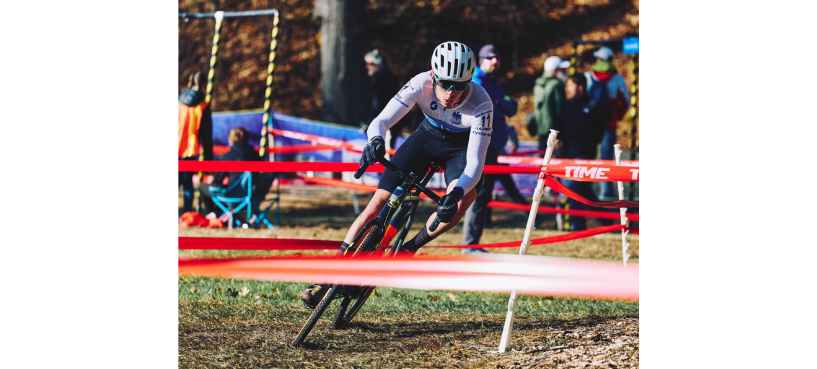
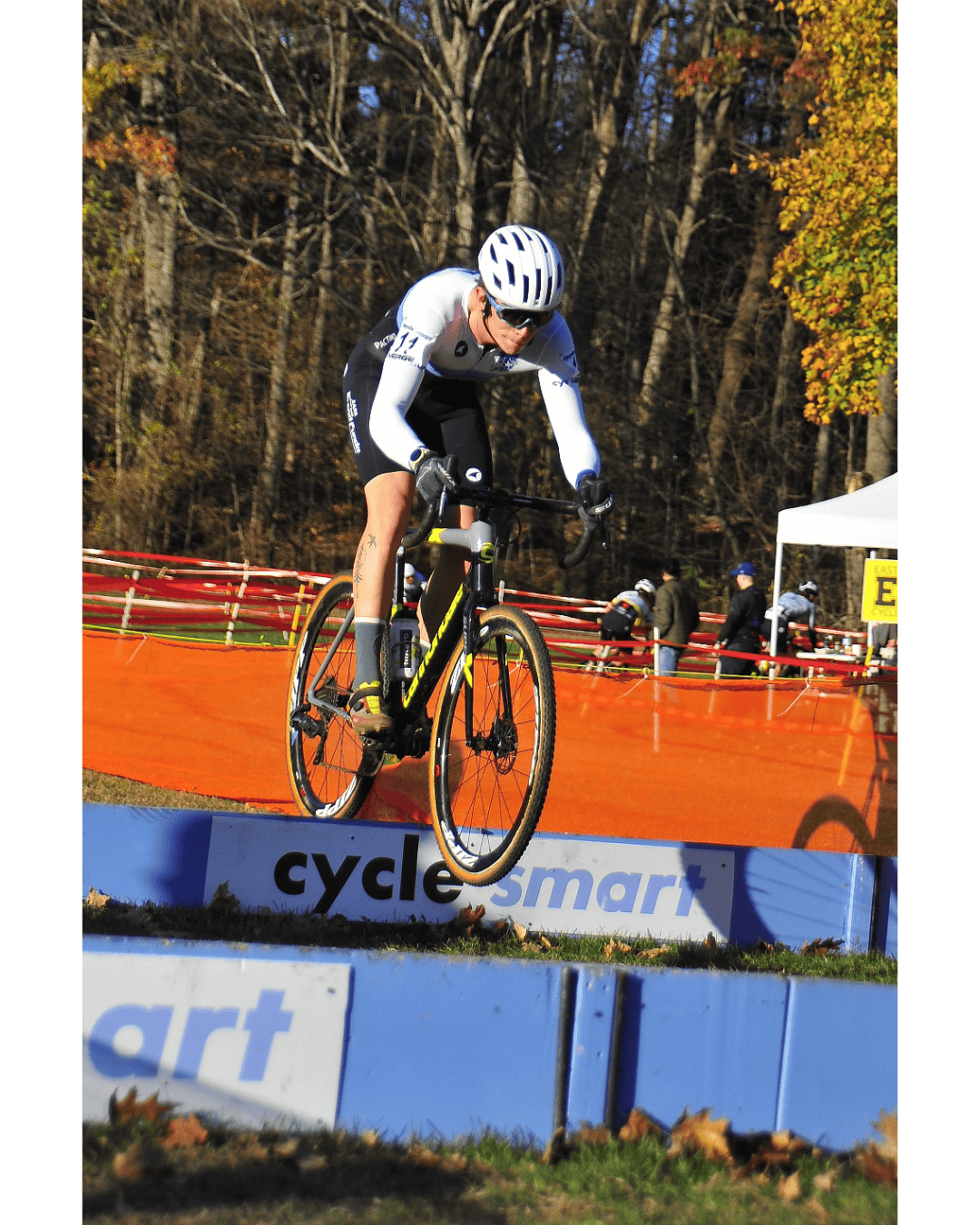
Cyclocross is a unique discipline in the sense that riders are frequently forced to navigate obstacles that are unrideable, forcing them to carry their bikes and run. It originated in the fields and farm roads of Belgium during the winter as a means of good, hard training during the road-racing off-season. With winter months come harsh cold, wet, muddy conditions that are a trademark of the discipline. I’ve finished many races left with absolutely no ability to use my brakes because the mud wore the brake pads down to the metal.
The other unique distinction between cyclocross and other disciplines is that you’re not going from point A to point B. Instead, you’re doing as many laps as you can in a closed circuit for one hour, yielding one of the most all-out physical efforts cycling has to offer. It’s similar to cross-country mountain biking except for the key distinction that you’re doing it on a road bike with skinny, knobby tires. It’s not the ideal bike for the job whatsoever; it’s actually fairly counterintuitive, but that’s part of what makes cyclocross unique.
It's also one of the greatest spectator sports on the planet, with every part of the course visible to onlookers and its absurd, gladiatorial nature. No other form of bike racing forces you to run with your bike on your shoulder because there’s a set of stairs in the race course, but cyclocross does. Over the years, it has become one of bike racing’s greatest spectacles, attracting tens of thousands of fans on a weekly basis in Europe. However, in the United States, it’s still deemed a fringe discipline, with varying degrees of popularity from year to year.
What’s your history with racing?
I’ve raced bikes since I was six years old and did my first cyclocross race at seven. I grew up in Putney, Vermont, which happens to host one of the oldest cyclocross races in the country. It’s a small town, but it holds a rich history of Nordic skiing and cycling, so it was almost obligatory that I’d be plopped onto a pair of skis before I could really walk and racing a bike by the time I was in first grade.
Most of my childhood was spent shivering in a thin layer of Lycra on the start line of some race, and I’m grateful for it. Endurance sports are innately hard and often uncomfortable. That small degree of tolerance you develop is something that’s been applicable to me through every part of my life. That being said, there was a point where I was pretty over it, and I ended up taking four years away from bikes after COVID lockdowns to enjoy some of my other interests, like skateboarding, basketball, and the arts.
However, since 2023 I’ve been back racing and have been on a mission to know what my potential is in the sport. This fall I balanced school with traveling all over the country, racing my first full calendar of professional-level cyclocross. This was made possible by my team, The JAM Fund, and the accommodations of my professors at Hampshire.
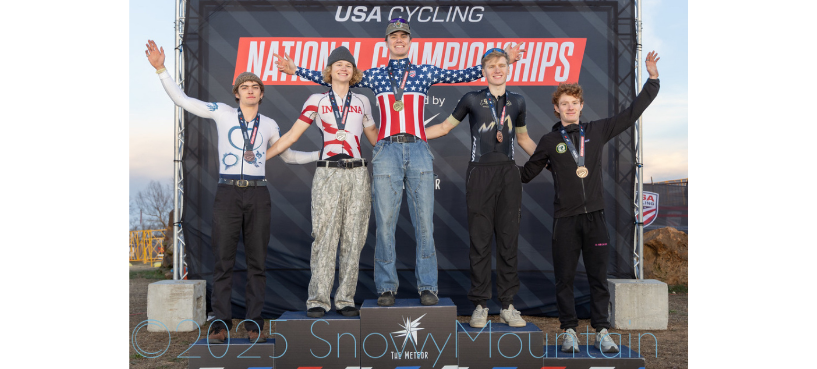
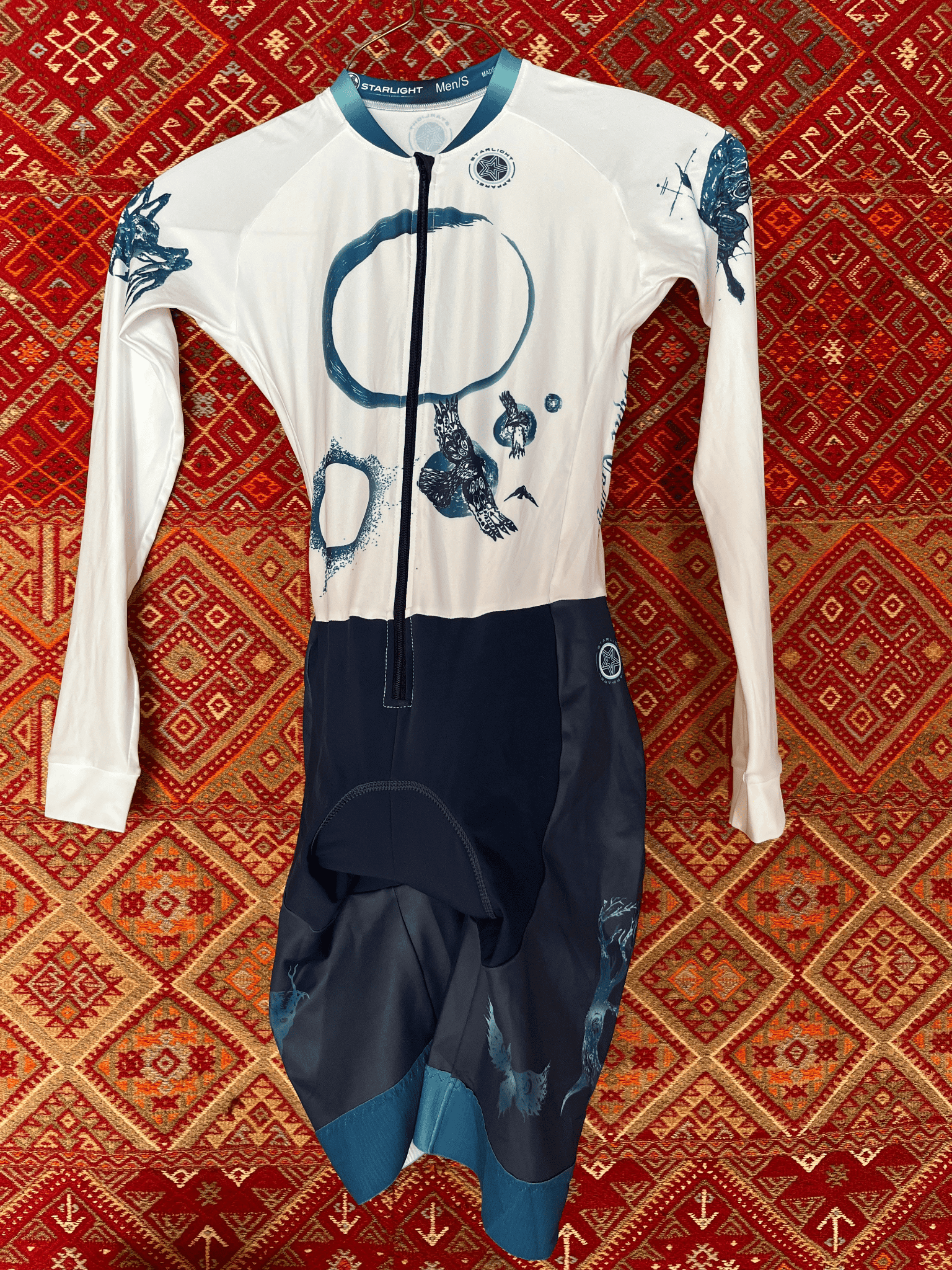
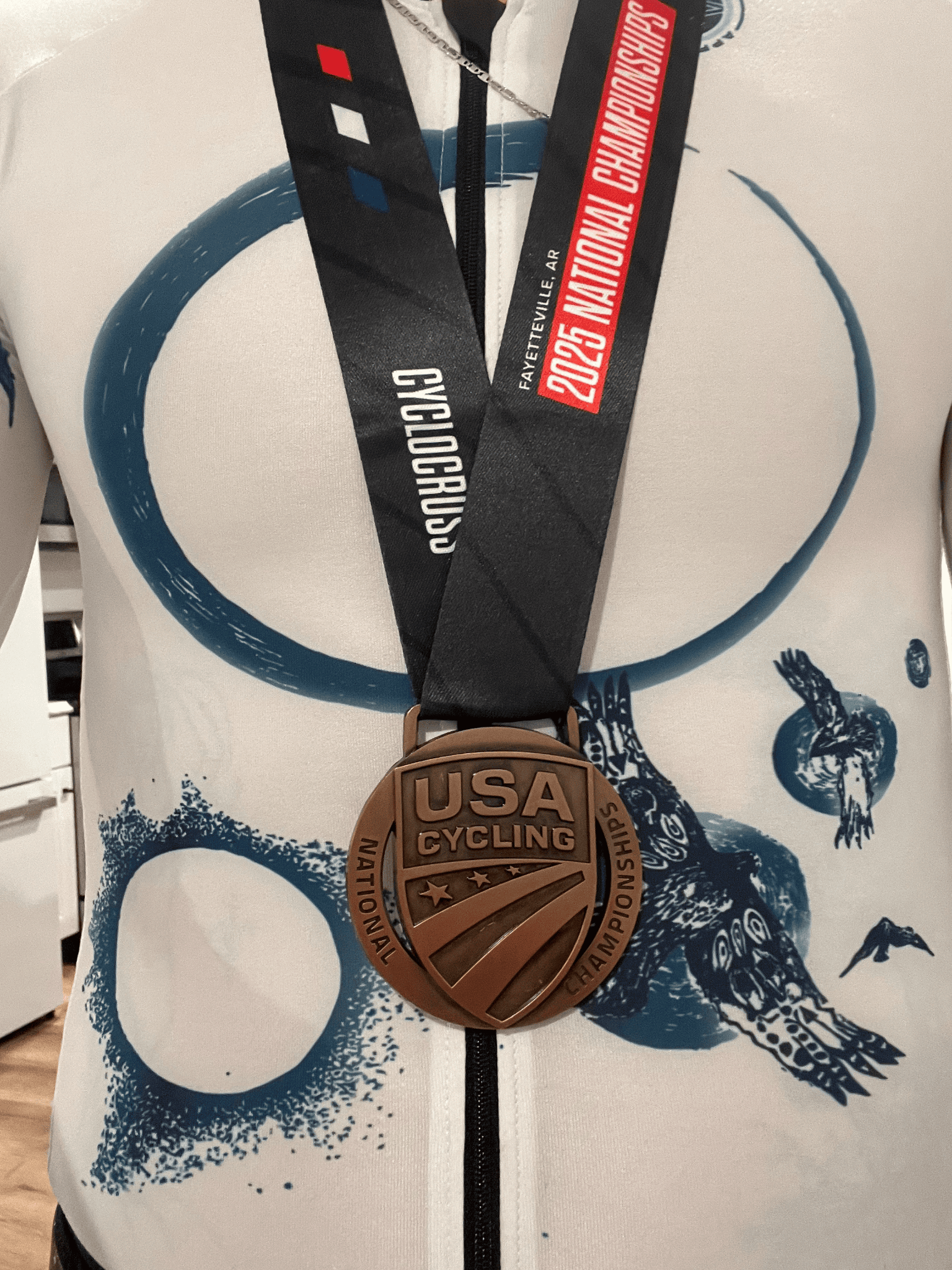
As I write this, I’m sitting in an airport in Arkansas coming off a fourth-place podium finish at the National Championships, representing Hampshire in the Collegiate Club category. Unfortunately, a flat tire ended my bid for the win, but I’m still very happy to step on the podium with a Hampshire kit [suit] that I designed myself!
Have you done any projects at Hampshire that are related to racing?
Over the past year or so I’ve been wracking my brain as to how I can intersect my artistic practice with cycling, and this semester I ended up doing an independent study with various materials and ideas related to racing. I repurposed old racing tires and race numbers into both sculptural and two-dimensional artworks.
I’ve also carried a camera with me over the course of the season, documenting moments with my team as we travel the country on a weekly basis. The team is currently a team of one, but I hope things like this interview will entice others who are interested in racing to reach out.
What initially attracted you to Hampshire?
I’ve always been someone who’s done their best work when left to their own devices, and the freedom to study authentically, independently, and devotedly at Hampshire made the decision obvious. Before Hampshire, I attended a progressive, arts-centric boarding school called the Putney School, located on a functioning dairy farm that’s entirely dependent on student labor. Those values of work ethic, showing up, having direct connection with the resources we depend on, and the ideals of progressive education in general made the transition to Hampshire very natural.
What are you studying? Is it what you thought you’d be focusing on when you came to the College or has it changed along the way?
I’m a Div II studying the visual arts, which is mostly what I intended. I’ve dabbled in a broad array of things during my time here, from geology to philosophy to anthropology, but I’m an artist at my core.
The biggest change to my life at Hampshire so far has really been the addition of cycling. I had no intention to race bikes ever again when I applied or when I first arrived here. I still don’t entirely know what happened! I just did one ride, then another, and another, and now I’ve raced my first World Cup, in Dendermonde, Belgium, against the best in the world!
Have any particular professors/advisors/staff members been especially inspiring or supportive? In what way?
I’ve been lucky to really connect with quite a few of my professors, most notably my current advisor, Gregory Kline; another member of my Div committee, Daniel Kojo Schrade; and Kane Stewart, with whom I’ve done almost all of my photographic work. All of them have inspired my artistic practice by means of great critiques and their general wealth of knowledge and experience within their fields. All of them have also been fully supportive of and accommodating to my life as a cyclist as well as an artist. I don’t think I could race at the level I do with much ambition if that wasn’t the case.
How do you balance your full-time education with training, travel, and racing?
The middle path between being a full-time student and nearly a full-time cyclist isn’t always one I walk gracefully. It’s like a pendulum, and when it swings too far to one side, it tends to take from the other. Hampshire provides the flexibility necessary for me to even think of pursuing a career as a cyclist, and it’s allotted me the freedom to integrate it into my education.
However, Hampshire has no infrastructure for a cycling team, which is much unlike the schools I race against. Schools such as Dartmouth, MIT, UVM, CMU, SCAD, and Marian all have longer-standing cycling teams with developed infrastructure. They have varsity teams that are school-funded and -organized and even provide scholarships along with race support, transportation, housing, and covered race entry fees. We don’t have that, which means I’ve started from scratch. Thanks to Assistant Director of Athletics Eric Nazar signing the necessary papers, I was able to affiliate Hampshire with USA Cycling as an official collegiate cycling team.
Article Tags

